A modular foundation
Consultations, participatory budgets, questionnaires and idea campaigns shared common components that could be configured for each programme.
Cap Collectif · CivicTech · Grand Débat National
I translated institutional requirements into a contribution experience that citizens could understand, trust and use, even under intense public visibility and a short deadline.
Cap Collectif is a civic participation platform that enables local authorities, companies and public institutions to create consultations, participatory budgets, idea campaigns, questionnaires and public engagement programmes.
The product brought publishing, contribution, voting, moderation and follow-up tools into one shared foundation while allowing each organisation to adapt its identity, rules and journeys.
Within the product team, I worked across the public experience and back office: client framing, user research, information architecture, prototyping, UI design and developer handoff. My role was to turn complex institutional requirements into understandable tools for both administrators and participants.
The same product had to be robust enough for teams organising participation and simple enough for the people taking part.
Consultations, participatory budgets, questionnaires and idea campaigns shared common components that could be configured for each programme.
Administrators needed to publish, organise stages, moderate and monitor participation without constantly depending on the Cap Collectif team.
The journeys made context, rules, stages and the outcomes of contributions visible to participants.
I worked with product, engineering and client teams to connect business constraints, user feedback and interface decisions.
Cap Collectif had to work for two very different user groups whose success depended on each other.
Municipal and institutional teams configure consultation stages, content, rules and moderation without becoming platform experts.
Participants need to grasp the topic, know what is expected and move through contribution without uncertainty.
The design challenge was systemic: a clear citizen experience depended on an equally clear configuration model behind the scenes. Information architecture, naming and step logic had to work across both sides.
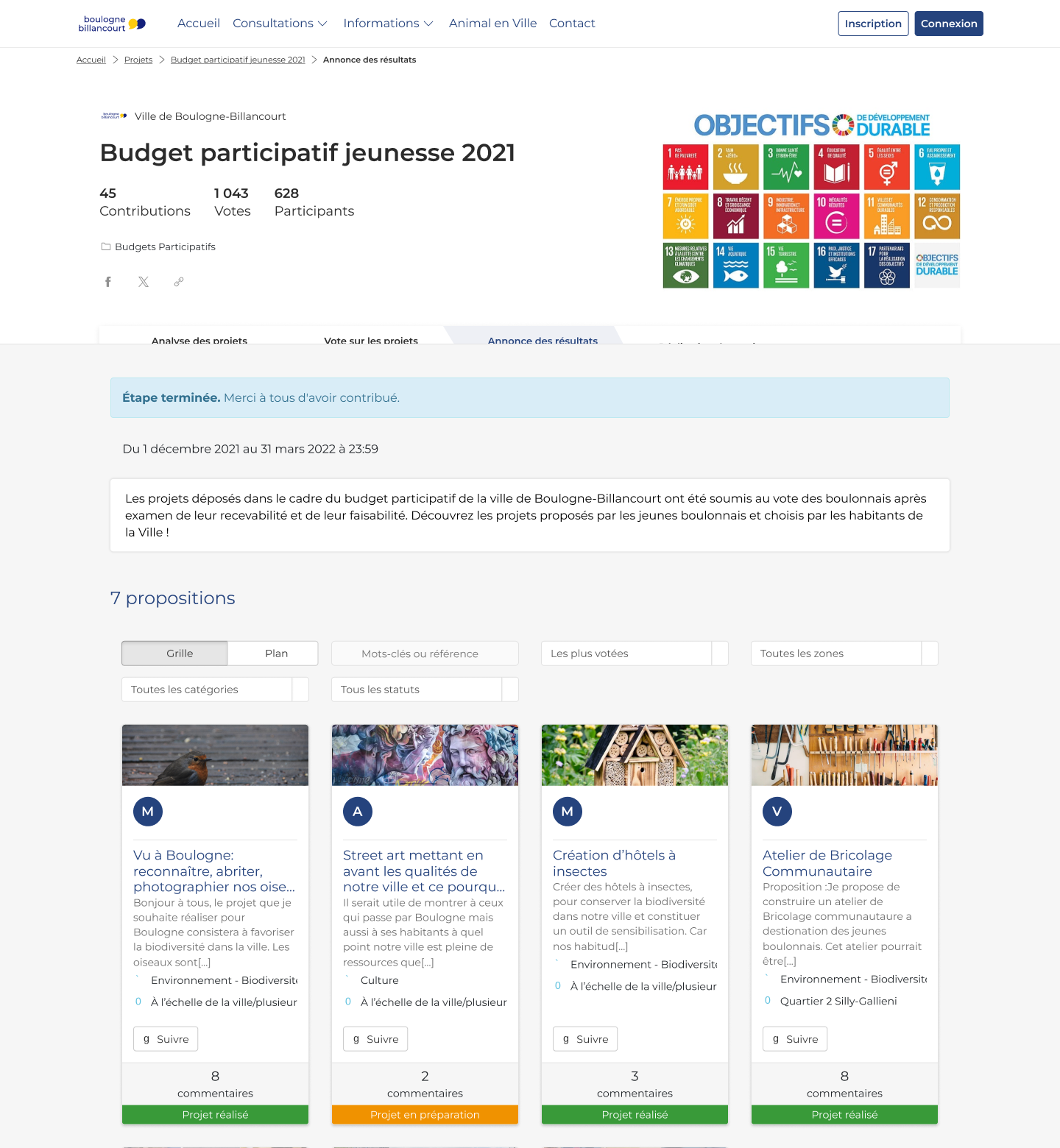
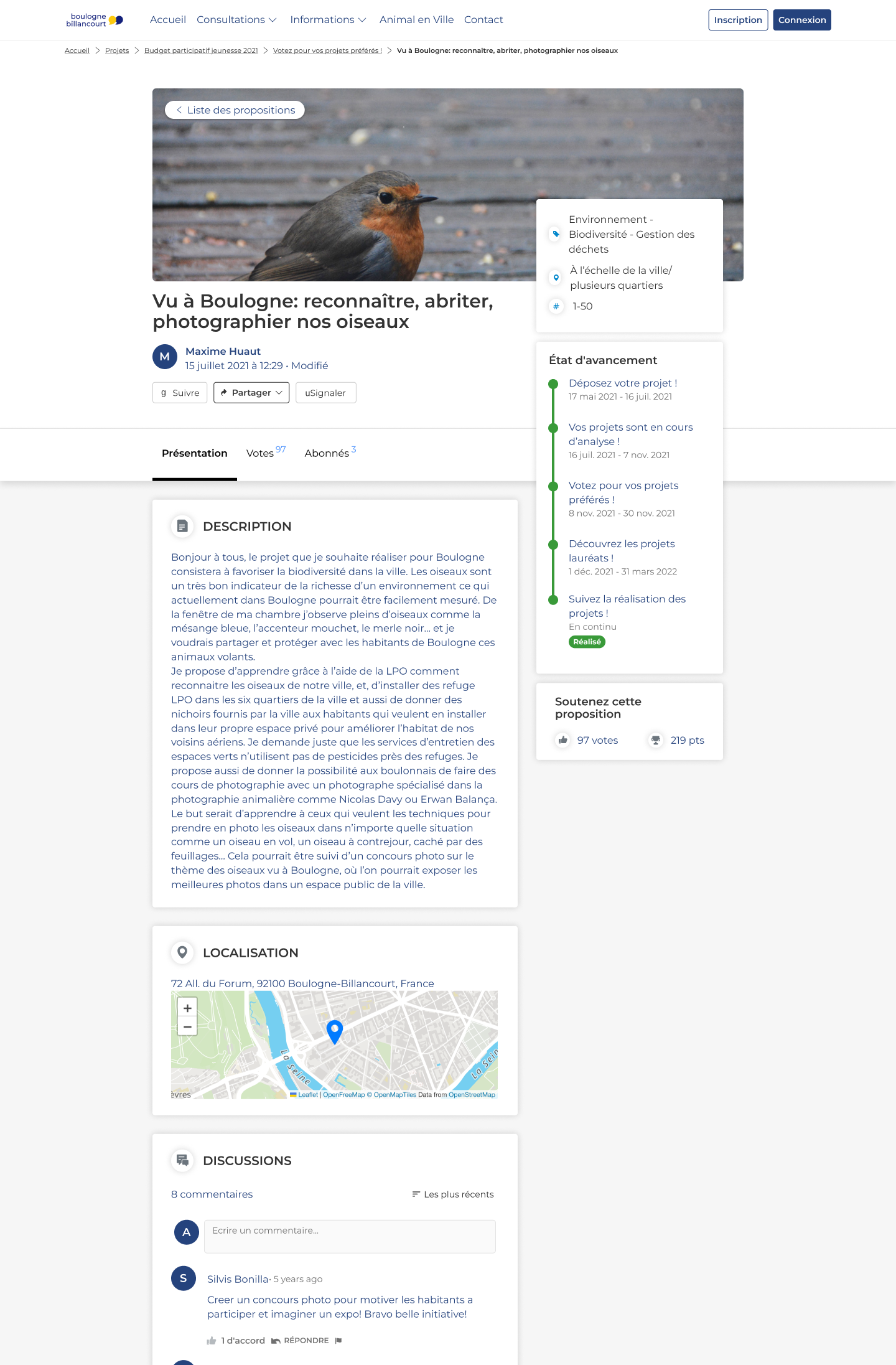
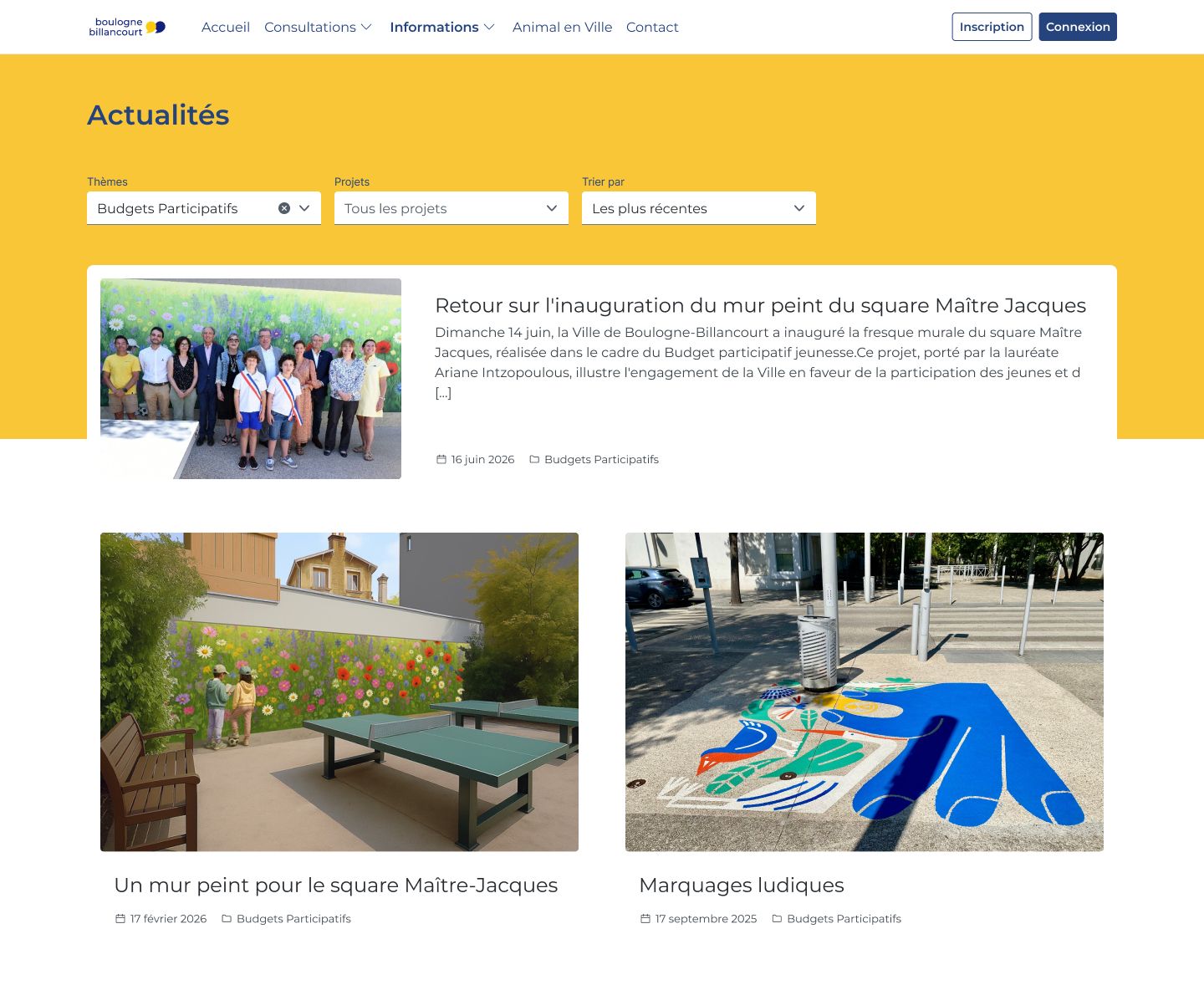
A shared structure connected the presentation of a process, its stages, submitted proposals and their progress. In a participatory budget, each contribution needed to make its theme, location, cost, votes and project status visible.
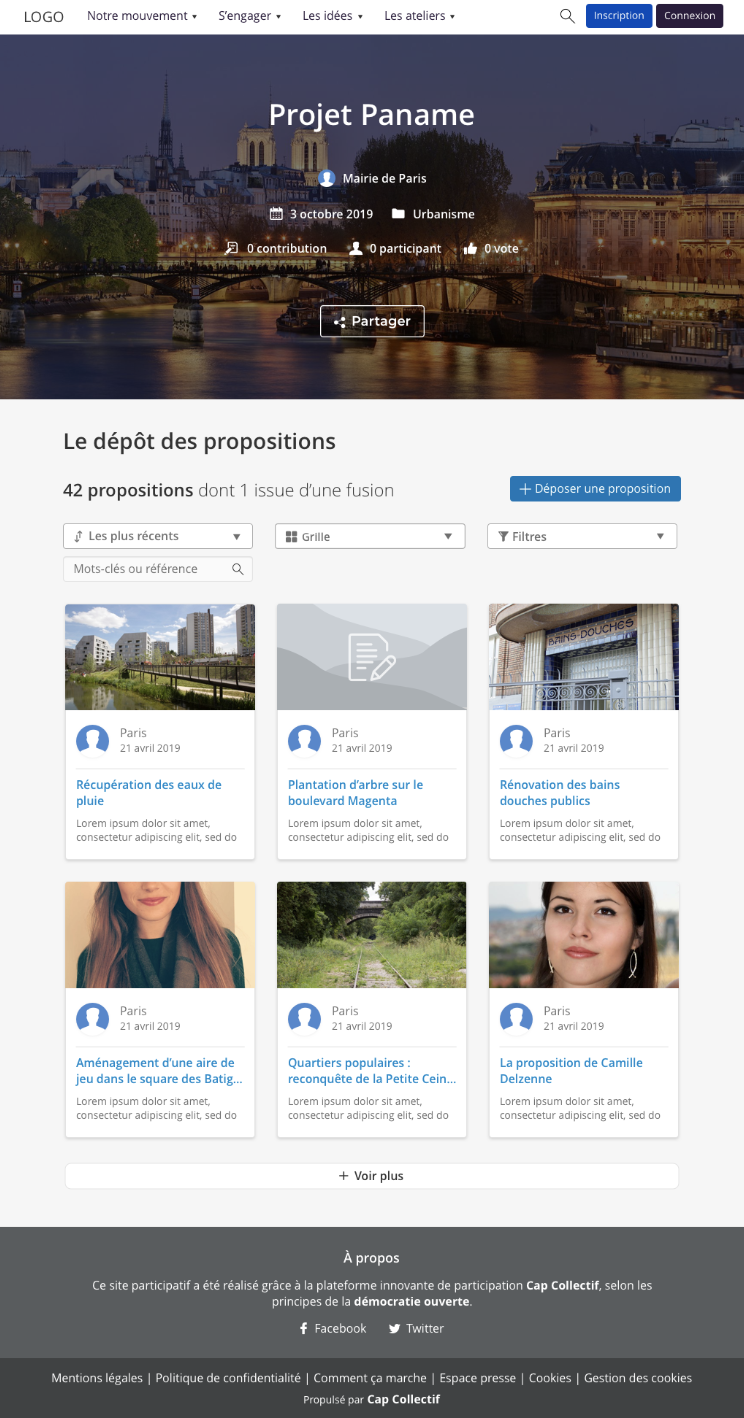
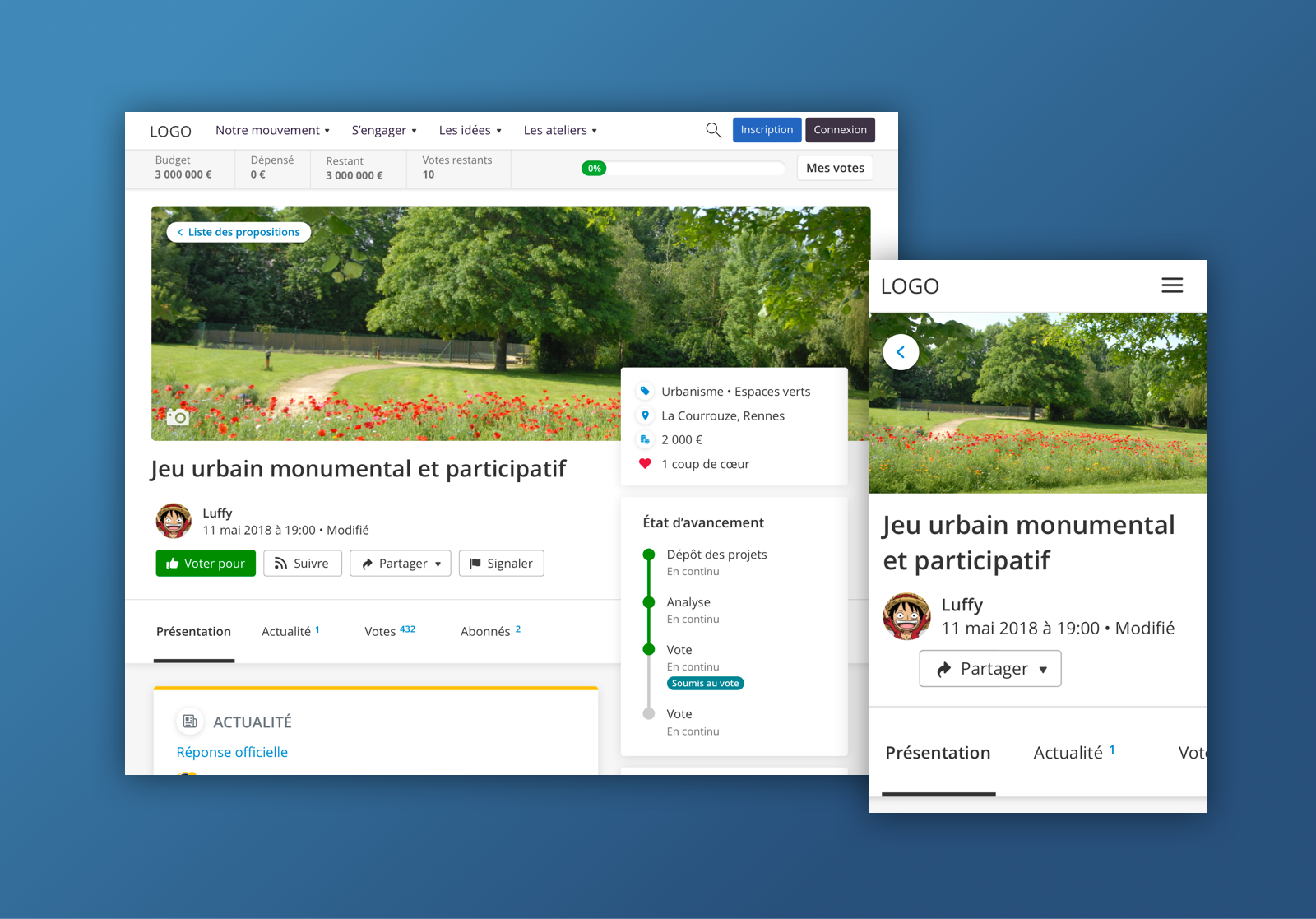
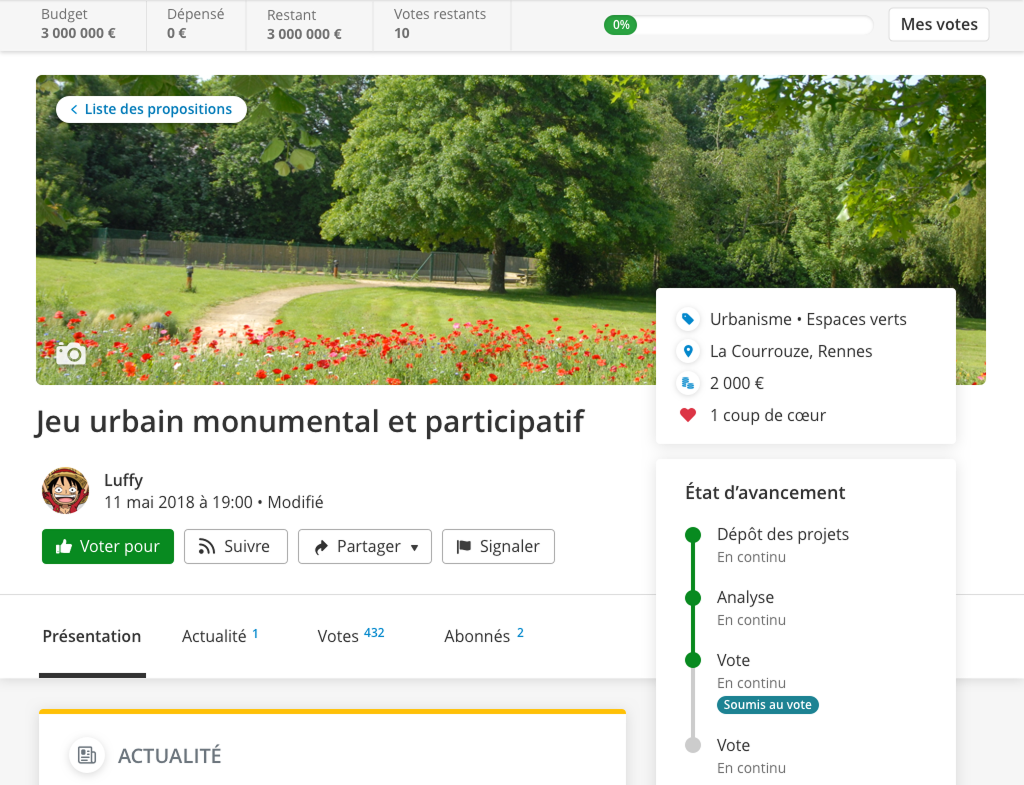
The platform connected the participatory budget’s framework, stages and results with proposals submitted by residents, including their votes, progress and discussions.
I translated dense institutional requirements into an experience organized around comprehension, reassurance and progressive commitment.
People should understand what the consultation covers and how their input will be used before contributing.
Clear steps, instructions and feedback reduce anxiety around a formal public process.
Forms and contribution patterns prioritize the information needed without overwhelming occasional users.
Visible confirmation and status help participants trust that their contribution has been received.
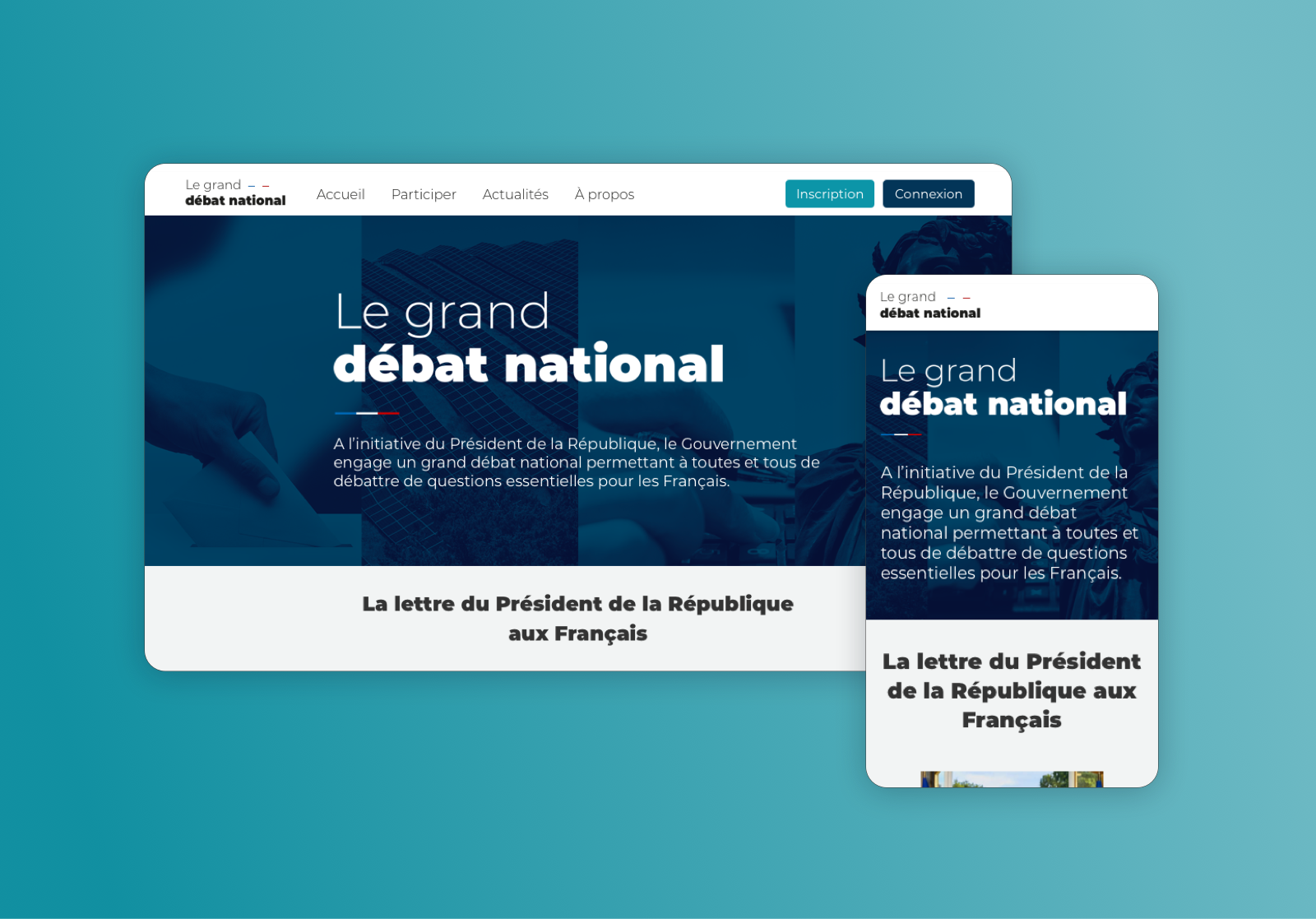
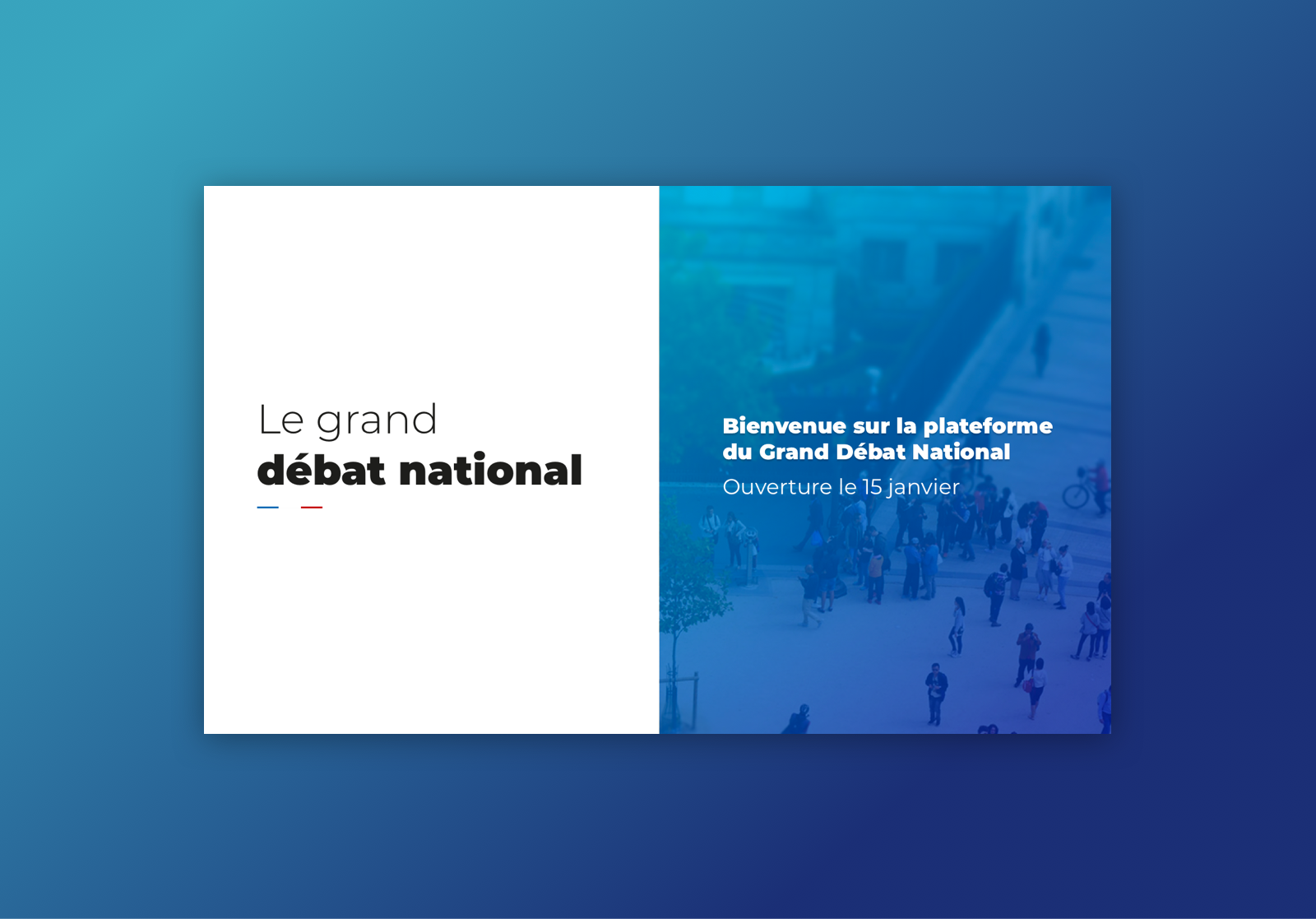
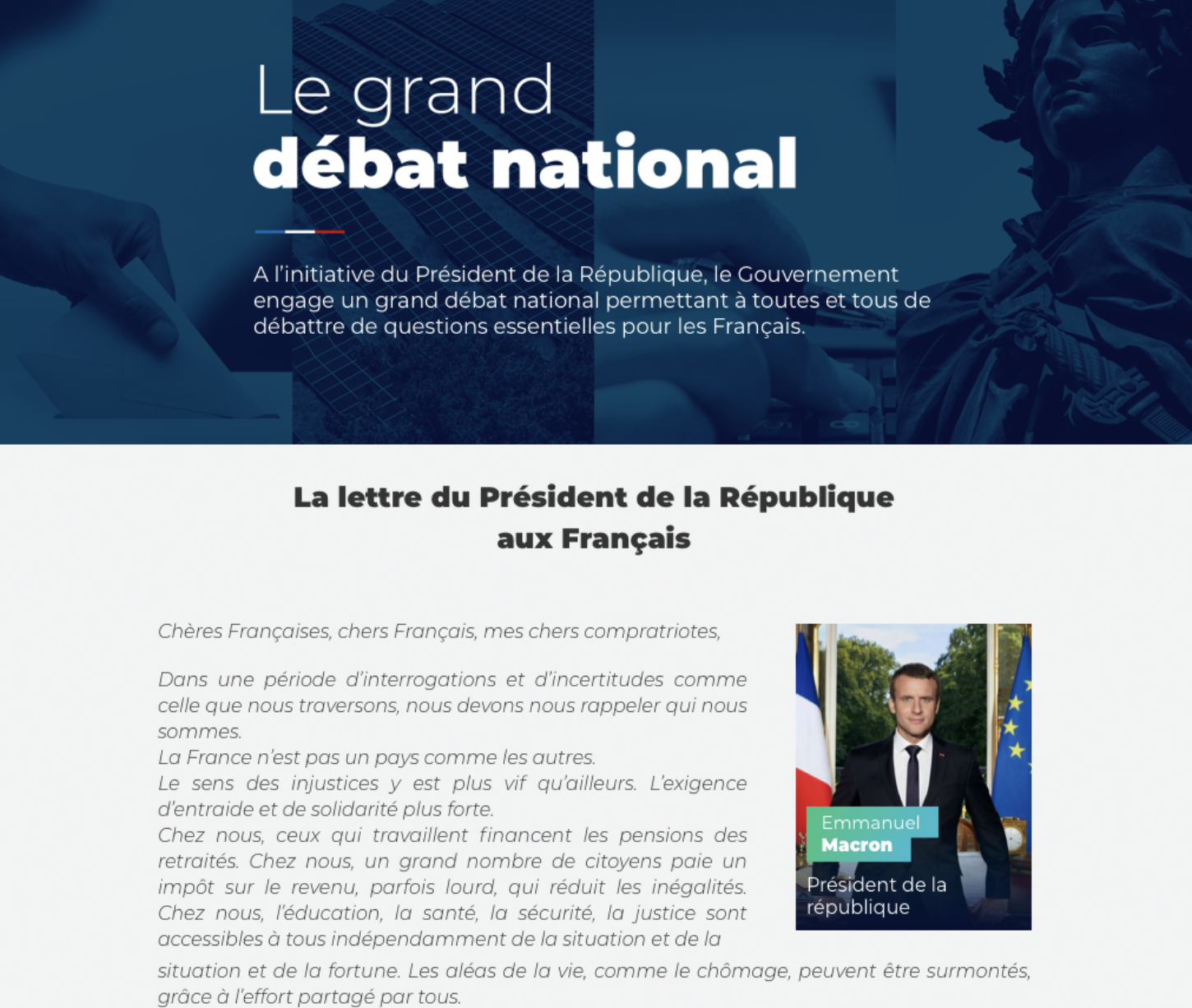
The complete homepage connected the presidential letter, how the debate worked, its timeline, themes, participation routes and the safeguards promised to the public.
In 2019, the platform was selected for the Grand Débat National, a French Government initiative inviting citizens to participate in a large-scale national debate. The service had to support exceptional contribution volume while remaining understandable to people with very different levels of digital confidence.
Clarity and accessibility were not polish. They were conditions for participation.
The experience could not rely on familiarity with consultation platforms or public-sector language.
Every interaction had to reassure people that their contribution had a clear place and purpose.
Contribution, moderation and publishing patterns needed to remain usable under exceptional volume.
Design decisions had to be fast, explicit and closely coordinated with product, engineering and government communications.
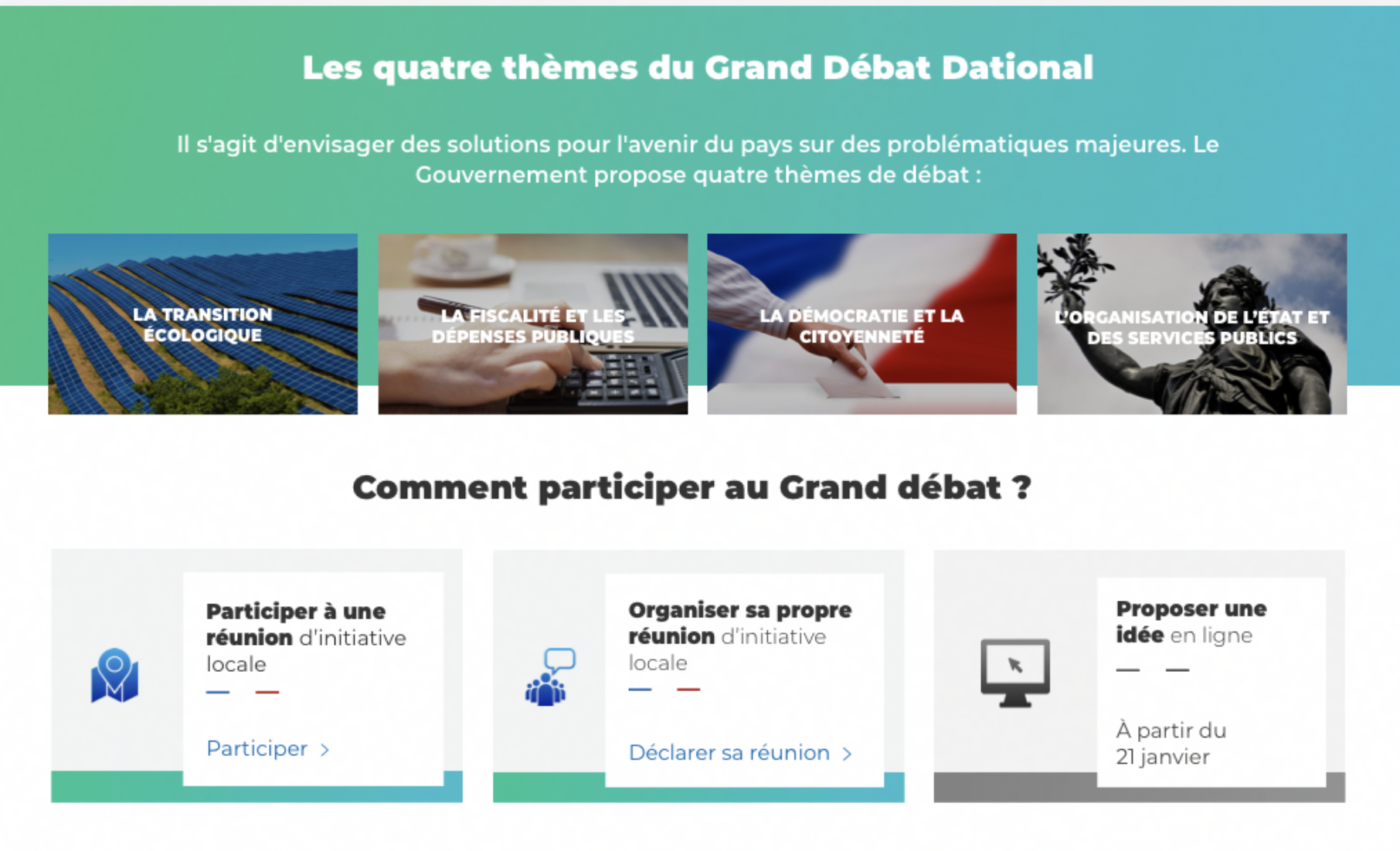
I designed key user flows, information architecture, responsive screens and contribution patterns, adapting the visual identity while collaborating in a high-pressure public context.
The short timeline made prioritization especially important. We focused effort on comprehension, contribution and reassurance, the moments that could directly enable or prevent participation. Close work with the Government communication team aligned product language with the wider public campaign.
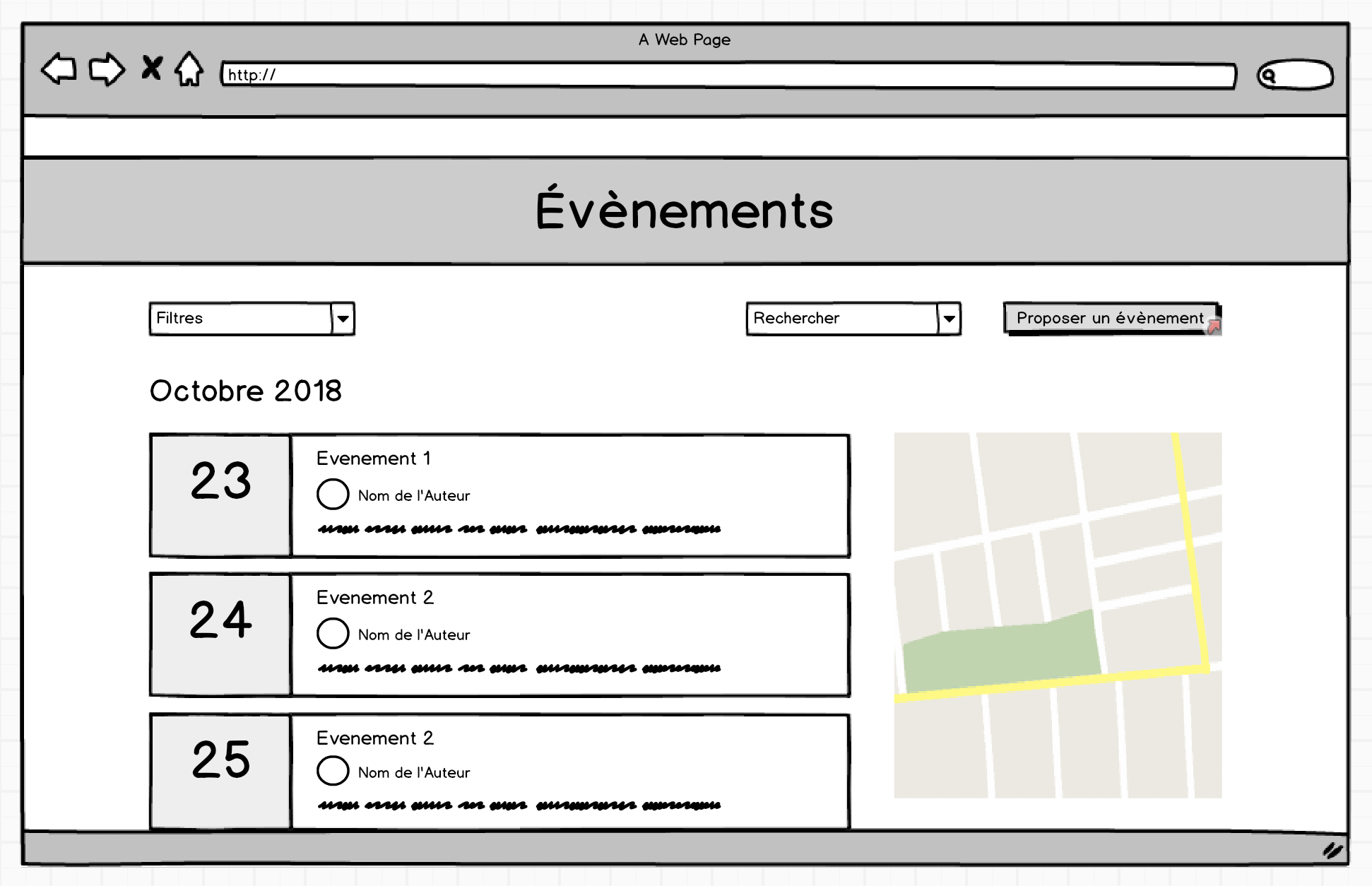
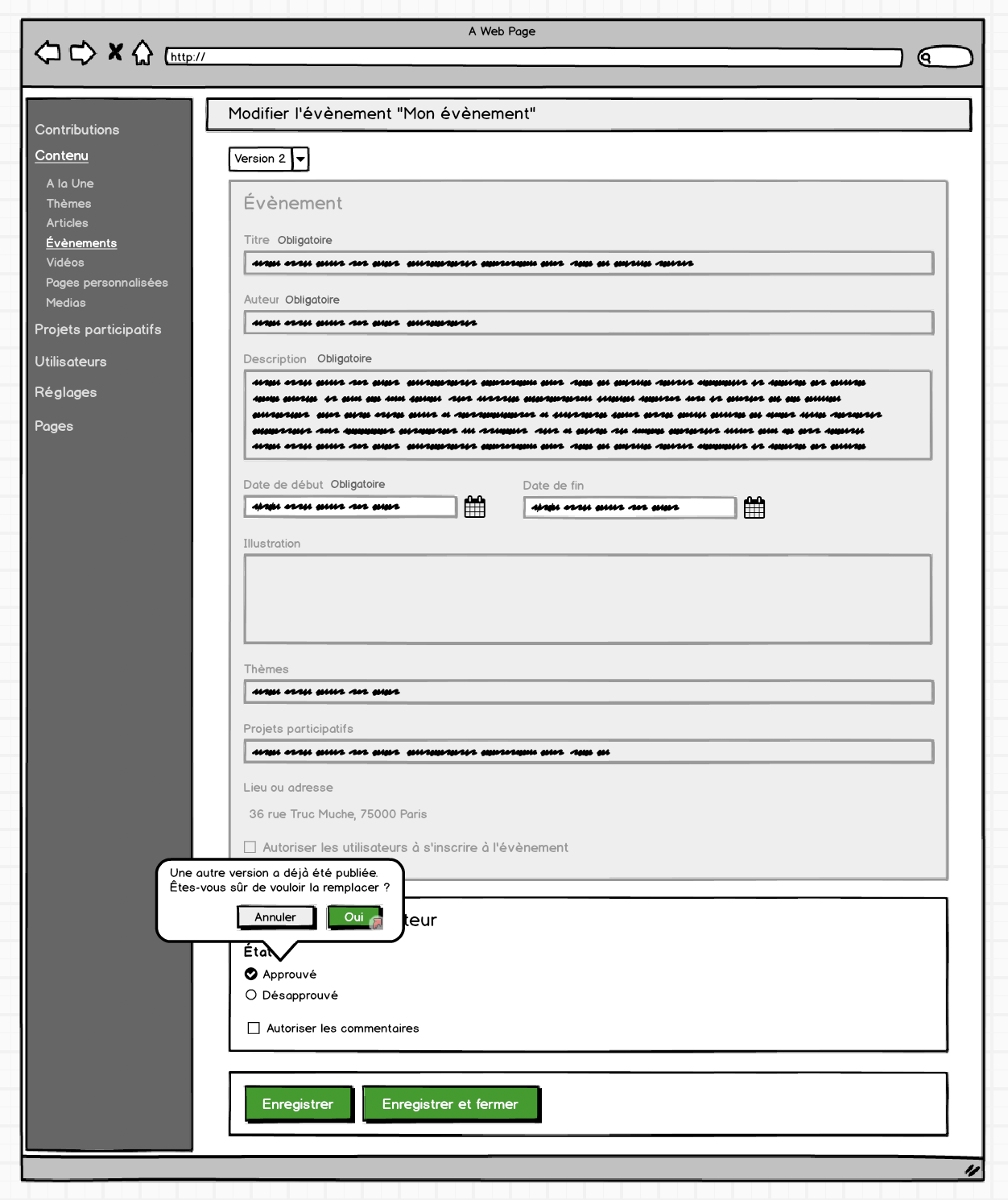
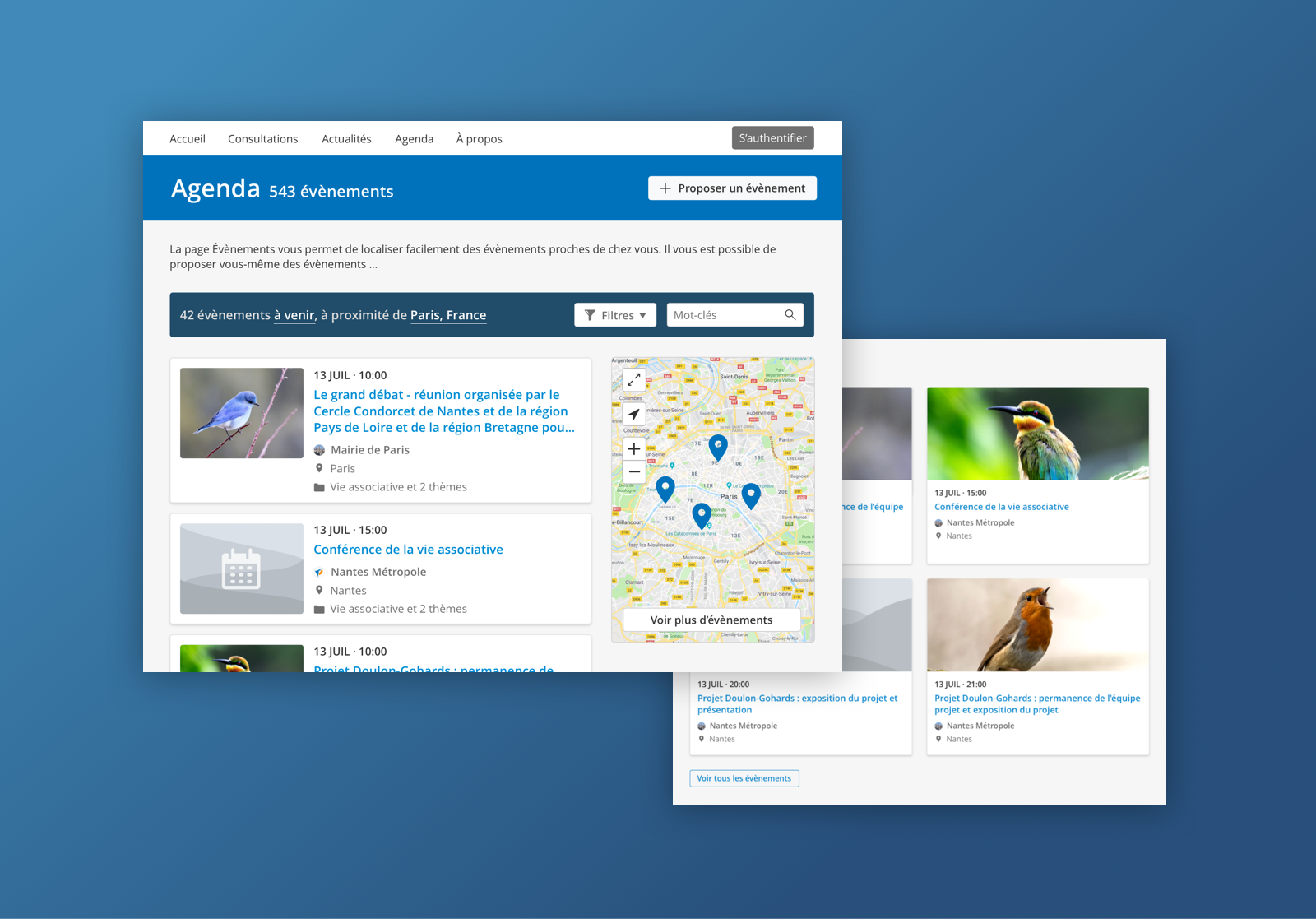
The agenda helped people locate, filter and propose events. In the back office, creating one brought together content, dates, location, themes, the related participatory project and publication status.
Readable hierarchy, plain language and responsive patterns supported a wide range of needs and devices.
Under deadline pressure, contribution clarity mattered more than decorative sophistication.
A shared language prevented public messaging and interface behavior from contradicting each other.
Feedback, status and expectations helped citizens understand what would happen next.
Beyond the Grand Débat National, Cap Collectif supported public and private organizations whose subjects, audiences and scales varied widely.
The product foundation had to provide enough structure to guide every participant while preserving each client’s identity, decision-making framework and consultation model.
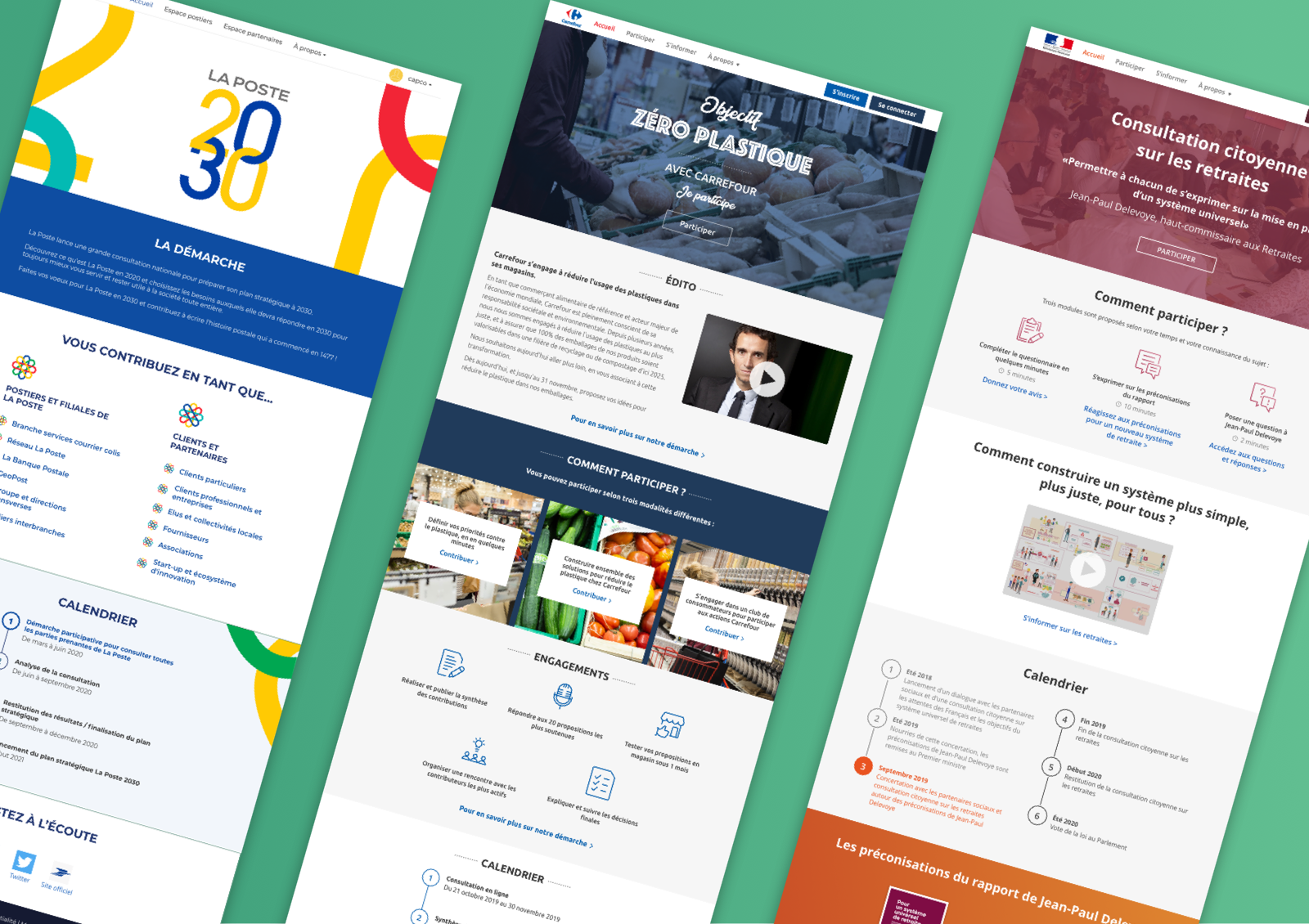
La Poste · French Government (pensions consultation) · Carrefour · EDF · Decathlon
Paris · Boulogne-Billancourt · Grenoble · Dijon · Le Havre
This selection represents only part of the consultations and platforms supported by Cap Collectif (many other projects were also designed and launched).
The experience supported a national consultation and millions of contributions by making a complex civic process more understandable, accessible and usable.
At this scale, interface decisions influence who feels able to participate. The product was not simply collecting content. It was mediating a relationship between citizens and an institution.
On civic products, trust is not a visual effect. It is the result of clear promises and understandable actions.