Splinterboard · Product design · Gaming analytics
Read the game to improve.
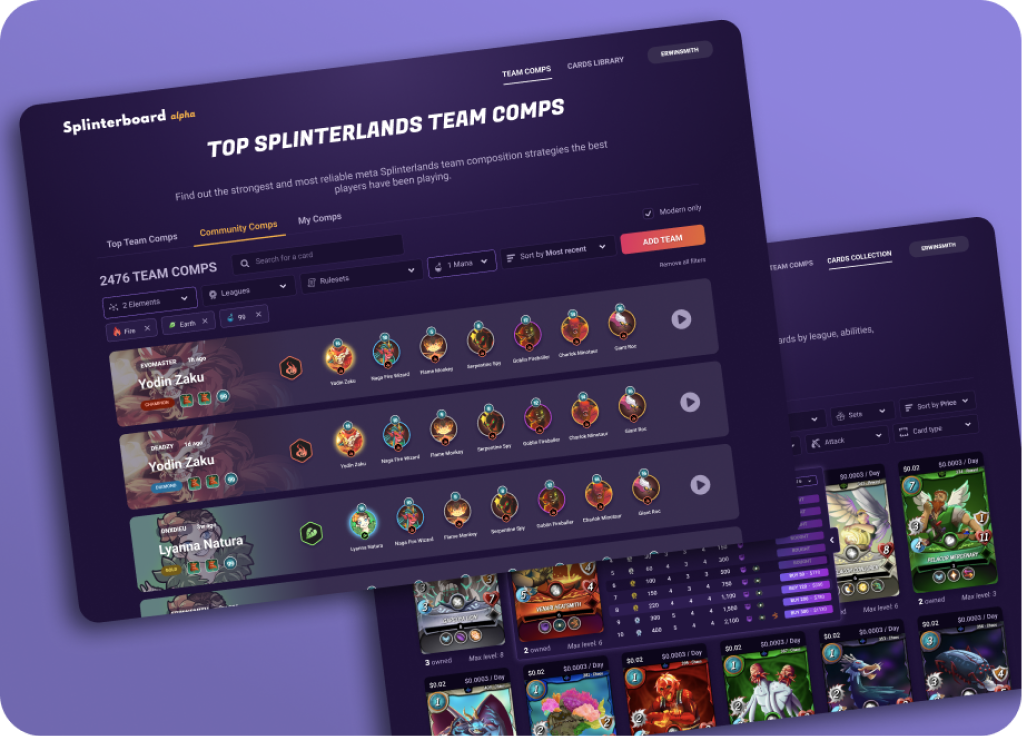
Match history, player statistics and team-composition analysis for people who want to improve at Splinterlands.
Turn game data into readable decisions
Splinterboard brings together the useful signals from a match so players can understand performance and compare team-composition choices.
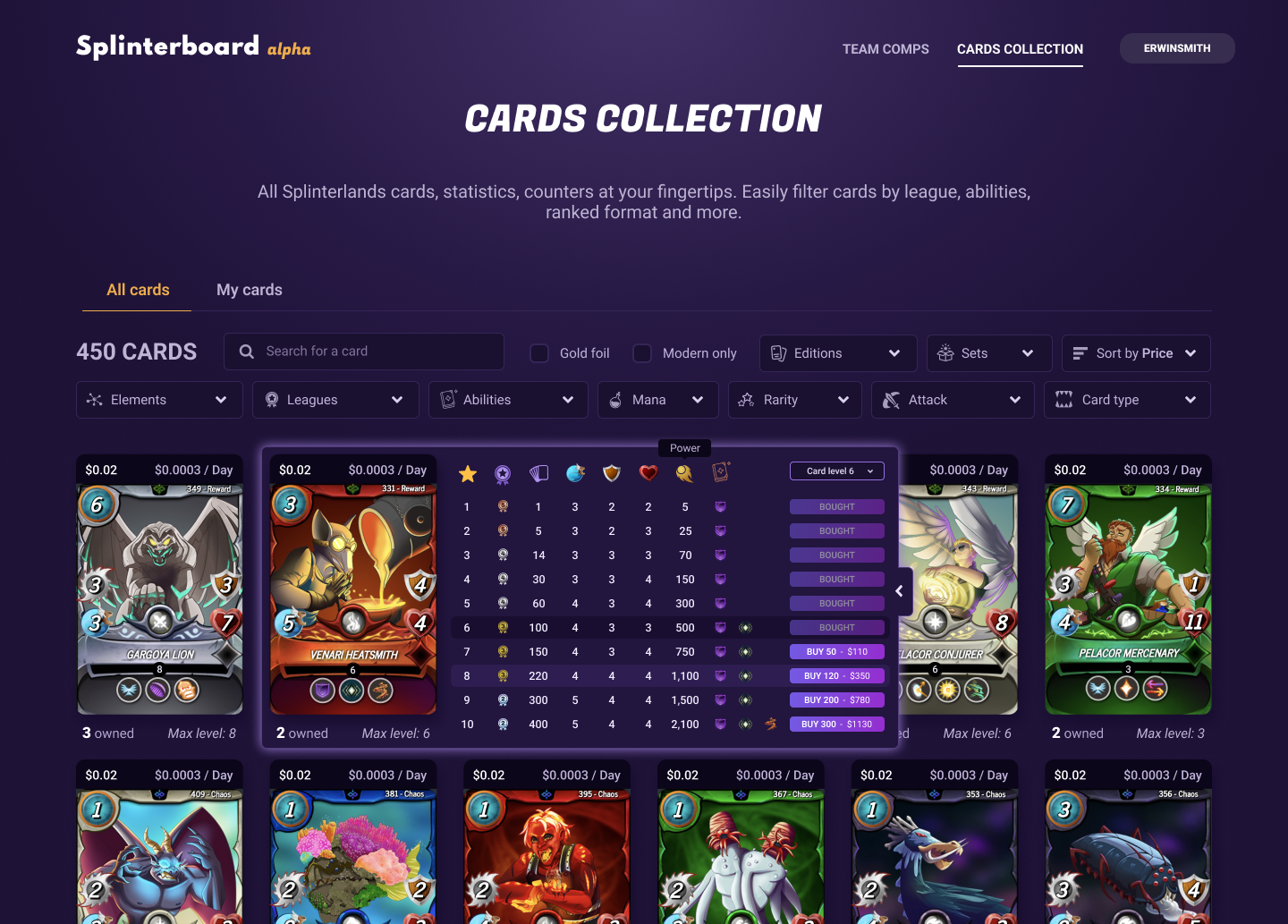
The design work focused on organising a large amount of data (cards, rules, leagues, mana and results) without losing the logic of the game. The interface foregrounds the criteria that explain a team composition, then progressively reveals the useful level of detail.
Find the team compositions that work
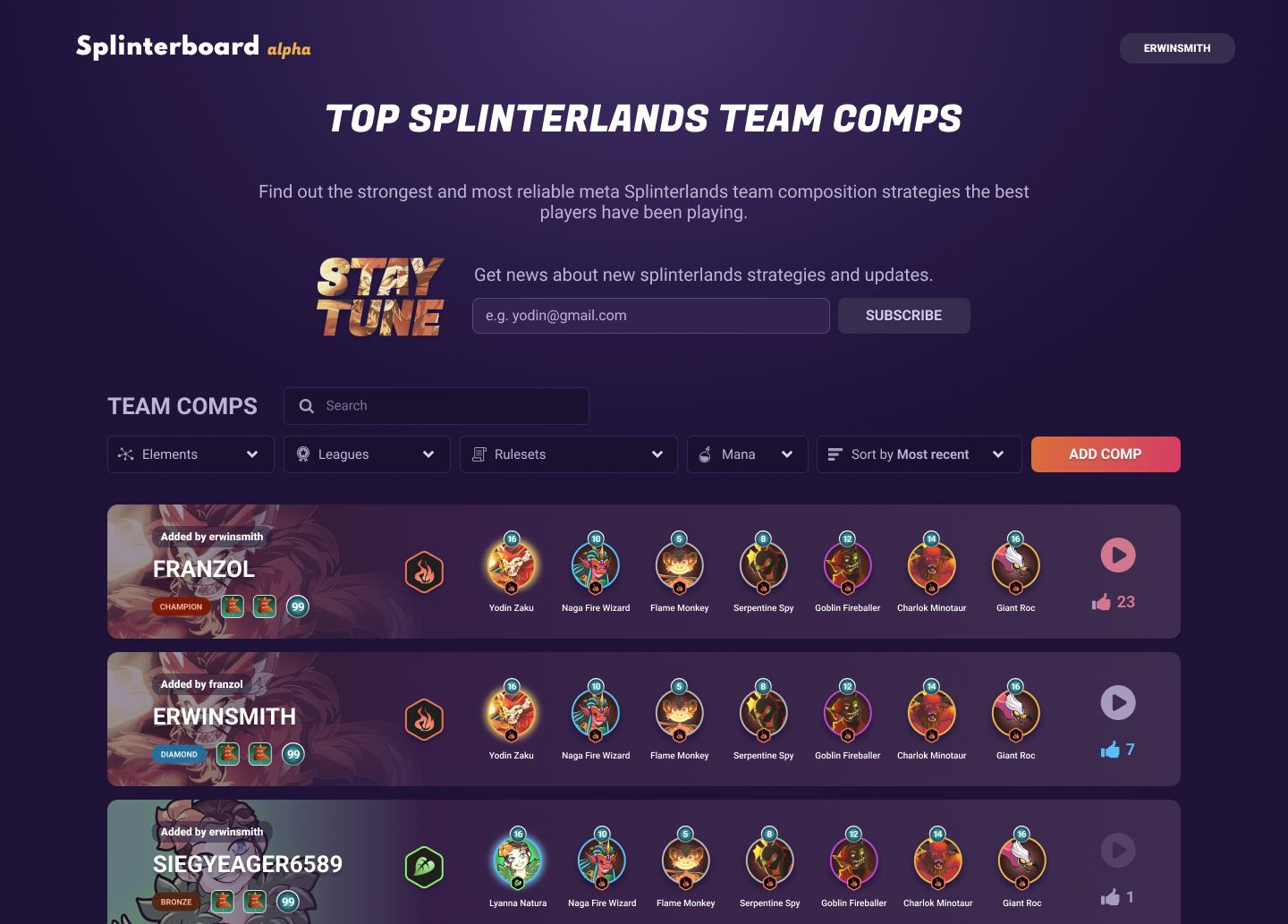
The product brings together teams played by the community and makes them comparable through the real parameters of a battle.
I structured search around elements, leagues, rulesets and mana limits. Players can quickly reduce noise, focus on the most relevant teams and understand which cards recur in a given context.
Move from a result to an explanation
A team composition is only useful when it can be linked to a battle and understood in context.
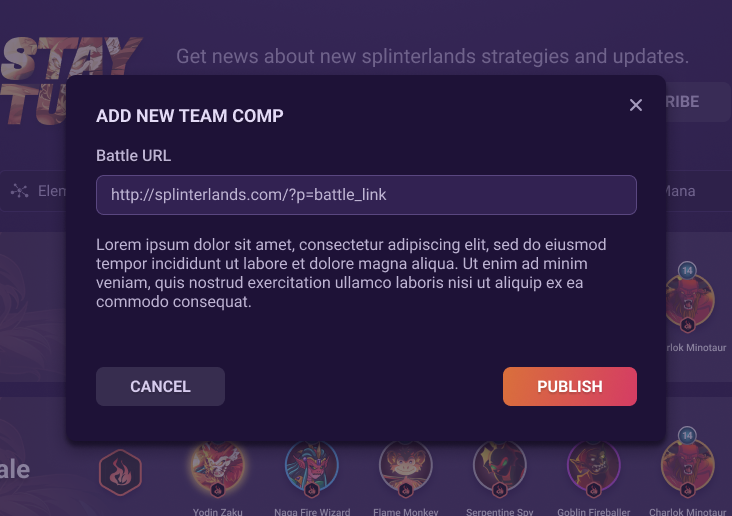
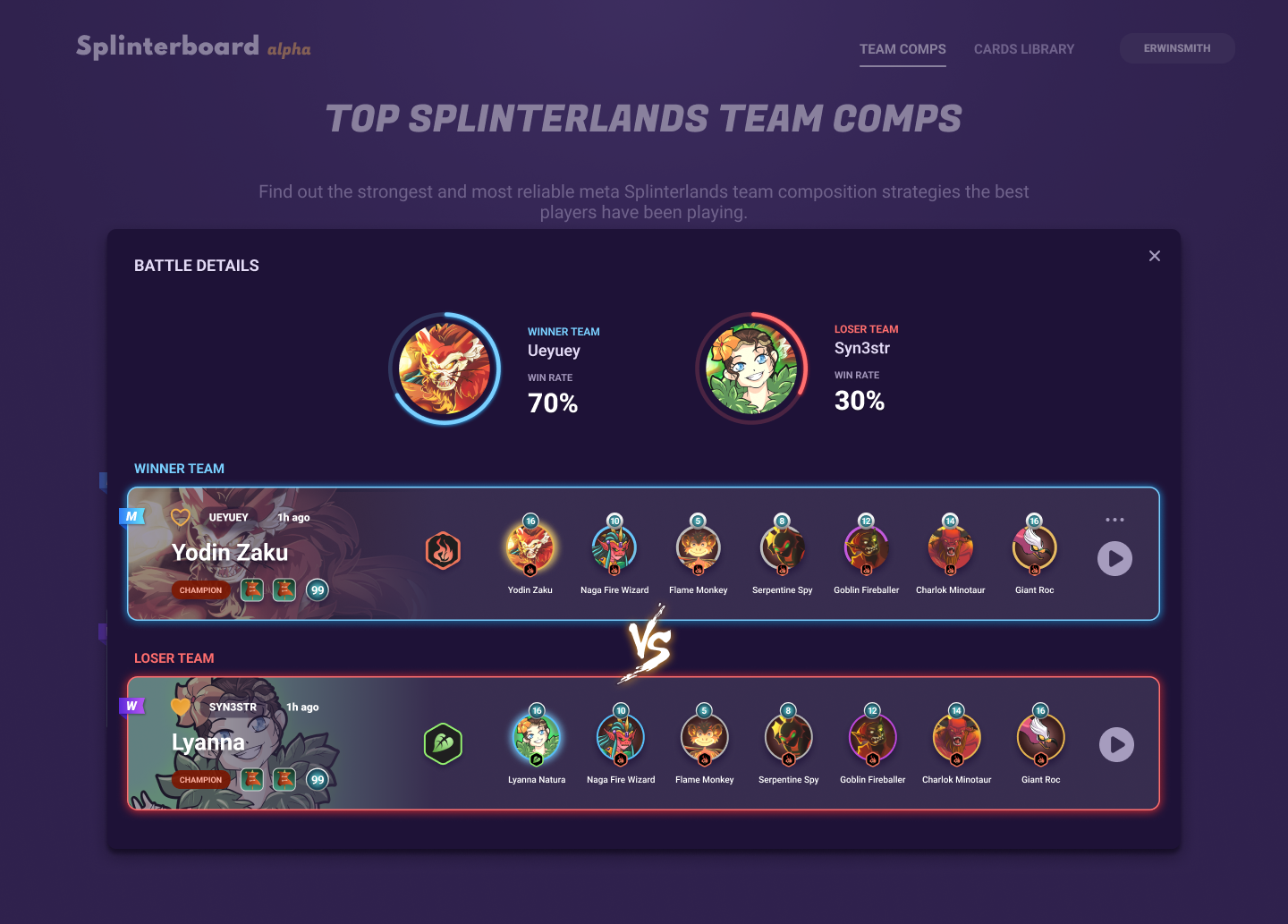
The journey lets players publish a team from a battle link, then open a side-by-side view of the winner and loser. Win rates, summoners and cards remain visible together, making analysis easier without forcing players to mentally reconstruct the match.